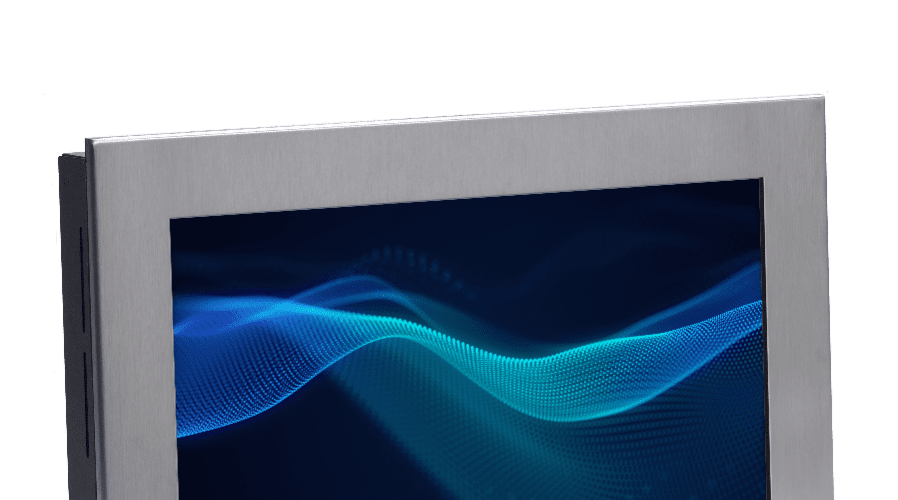
Selecting the proper industrial touch display isn’t as simple as choosing a size or mounting option. Industrial environments vary widely—temperature swings, moisture, vibration, electrical noise, operator glove use, and visibility requirements can all impact touch screen performance. Instead of asking which system is “best overall,” the real question is which technology is engineered to perform reliably in your environment.
Across today’s ruggedized computing landscape, three touch screen types dominate: resistive, projected capacitive (PCAP), and armored touch systems. Each offers unique advantages depending on your conditions, and understanding these differences is essential when choosing an industrial display or industrial touch panel monitor that must operate continuously under demanding conditions.
The differences between resistive, PCAP, and armored touch screen technologies become clear when considering glove interaction, exposure to liquids, vibration levels, and EMI—factors that determine long-term reliability in industrial settings.
Below is a breakdown of how each touch screen technology performs under real-world industrial conditions.
Resistive Touch Screens: A Durable Industrial Touch Display for Rugged Conditions
Resistive technology responds to pressure rather than electrical charge, making it an ideal choice for environments where operators frequently wear heavy protective gloves, interact with tools, or work around liquids or debris. Because resistive touch screens are not affected by contaminants on the surface, they remain reliable in challenging applications such as manufacturing, warehousing, and field enclosures. Resistive touch screens also remain a popular choice for rugged industrial monitors used in environments where glove compatibility and resistance to contamination are essential.
The trade-off is a slight reduction in optical clarity and a lack of multi-touch capability. But when reliability in unpredictable environments matters most, resistive technology remains a proven performer.
Best when operators:
- Wear thick or insulated gloves
- Work around oils, moisture, or particulate matter
- Use tools or styluses to operate equipment
Projected Capacitive (PCAP): A High-Clarity Industrial Display for Precision Workflows
PCAP touch screens—commonly seen in consumer electronics—have evolved for industrial use, offering excellent clarity, responsiveness, and support for modern multi-touch gestures. These displays are often chosen for advanced HMIs, cleanrooms, medical settings, and precision-driven workflows that require a fast, intuitive interface.
However, because PCAP systems detect electrical charge, liquid droplets, electrically noisy environments, and heavy gloves can interfere unless the display is specifically engineered for industrial conditions.
PCAP is best suited for:
- Clean or controlled environments
- Applications requiring gesture control
- Operators using thin gloves or bare hands
Armored Touch Systems: Built for Harsh, High-Risk Conditions
Armored touch technology incorporates rugged protective layers, reinforced glass, and shock-absorbing structures to ensure stable operation in environments characterized by heavy vibration, physical impact, extreme temperatures, or prolonged exposure to weather. These systems are the go-to choice for marine, military, transportation, and energy applications where failure is not an option.
Armored touch displays are also engineered to resist EMI and RFI, helping to maintain accuracy even in the presence of powerful motors, communication equipment, or industrial power systems.
These displays excel in:
- Outdoor, marine, or high-moisture environments
- High-vibration installations (vehicles, heavy machinery)
- Industrial sites with significant EMI
How to Choose the Right Industrial Touch Panel Monitor for Your Environment
The best industrial touch display depends entirely on your operating conditions. Resistive screens offer unmatched reliability in glove-intensive environments, while PCAP displays excel in clean spaces that require precision and clarity. Armored touch systems deliver maximum durability in harsh or high-risk conditions.
When selecting an industrial touch panel monitor, consider:
- Glove type (light, thick, insulated)
- Presence of liquids, oils, or airborne debris
- Shock and vibration levels
- EMI exposure
- Required touch precision
- Viewing and clarity needs
- Expected lifespan under real-world conditions
Evaluating these factors will help ensure that your interface performs reliably and safely throughout the entire lifecycle of your equipment.
Why Industrial Teams Choose AbraxSys Touch Displays
Whether you’re outfitting a factory workstation, a marine navigation system, a transportation console, or a rugged field terminal, selecting the right touch screen technology is crucial for ensuring consistent performance. Industrial environments require touch interfaces that remain accurate, responsive, and durable despite exposure to vibration, moisture, electrical noise, or heavy operator use.
As the industrial touch screen display market is projected to nearly double by 2032, organizations are increasingly seeking rugged, environment-specific display technologies that maintain performance in harsh conditions.
AbraxSys designs industrial touch displays explicitly engineered for these conditions. Our resistive, PCAP, and armored touch technologies deliver dependable operation, high clarity, and long-term durability built for industries where reliability is non-negotiable.
When uptime, accuracy, and resilience matter, rely on an AbraxSys industrial touch panel monitor designed to perform in the most demanding environments. Explore the touch screen technologies we offer or contact our team to discuss the ideal interface for your application.